
Quick Summary
Core Operational Fix: Diagnosing and resolving network socket timeouts, load balancer proxy limits, and API latency spikes during high-volume B2B credit card authorization batches.
Regulatory Compliance Step: Enforcing PCI-DSS tokenization standards and SOX 404 audit controls for all manual payment overrides and timed-out transaction retries in multi-entity ledgers.
Systems Troubleshooting Takeaway: Implementing idempotency keys, exponential backoff algorithms, and automated reconciliation scripts to prevent duplicate settlements and orphaned billing records.
Mastering High-Volume B2B Payment Gateways and Gateway Timeouts
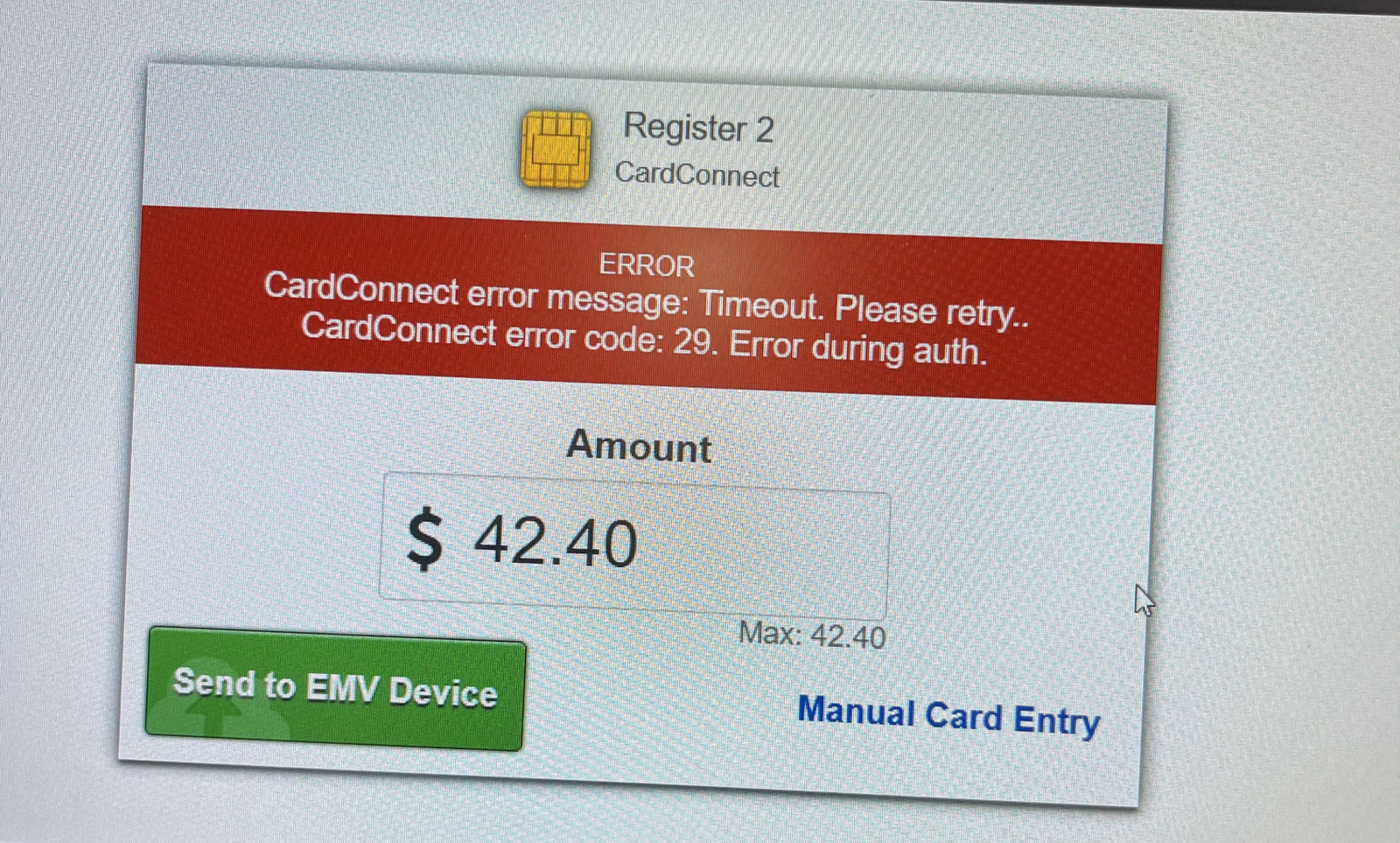
Direct Solution / Key Takeaway: When global enterprises execute high-frequency order-to-cash cycles across multi-entity ledgers, financial controllers frequently need to fix b2b credit card processing timeout error gateway exceptions during peak billing windows. In my experience auditing SAP S/4HANA workflows and NetSuite OneWorld payment integrations, system architects must know how to troubleshoot high volume card auth latency enterprise payment spikes that crash batch billing runs. Whether you are seeking a reliable b2b payment gateway socket connection timeout fix, attempting to resolve card processing gateway timeout erp billing discrepancies, or configuring resilient enterprise payment gateway authorization retries, mastering network socket mechanics and idempotency protocols is essential for protecting enterprise liquidity and maintaining continuous operations.
In my experience auditing SAP S/4HANA workflows, NetSuite OneWorld multi-entity environments, and global treasury management systems, processing high-volume B2B credit card payments is one of the most operationally demanding tasks in enterprise financial architecture. When corporate billing engines generate thousands of simultaneous card authorization requests at month-end or quarter-end, underlying network infrastructure, middleware adapters, and external payment gateway endpoints are pushed to their limits. When a socket connection drops or an API gateway response stalls beyond configured latency thresholds, systems throw critical timeout errors, leaving finance teams scrambling to determine whether a customer’s card was charged, whether an invoice remains open, or whether a retry will trigger duplicate card settlements.
As an Enterprise ERP Financials Architect, Corporate Treasury IT Specialist, and FinTech Compliance Consultant, I guide finance operations and treasury IT teams through root-cause analysis, network parameter tuning, API payload structuring, and internal control deployment. This comprehensive guide outlines the exact system navigation paths, proxy configuration settings, database journaling mechanics, and compliance protocols required to achieve bulletproof high-volume card processing resilience.
The Architectural Anatomy of Enterprise B2B Payment Processing
To troubleshoot and resolve timeout errors effectively, you must first understand how transaction data flows from your enterprise accounting software to external payment processing networks.
The Order-to-Authorization Pipeline
When an enterprise ERP initiates a credit card capture or authorization request—whether through SAP Convergent Invoicing or NetSuite SuitePayments—the transaction traverses multiple infrastructure layers before reaching the acquiring bank:
-
ERP Billing Engine: The source billing document triggers a payment execution event, wrapping transaction line items, customer tokenized card identifiers, and billing amounts into an XML or JSON payload.
-
Middleware and API Gateways: Integration layers (such as MuleSoft, Dell Boomi, or SAP Cloud Integration) route the payload across corporate firewalls, handling SSL/TLS handshakes and encryption.
-
Load Balancers and Reverse Proxies: Enterprise load balancers (such as AWS Application Load Balancers or NGINX reverse proxies) distribute incoming and outgoing API traffic across server clusters.
-
External Payment Gateway: Gateways like CyberSource, Stripe, or Adyen ingest the request, route it through card networks (Visa, Mastercard, American Express), and return an authorization code or decline message.
-
A common mistake I see enterprise treasury teams make is treating the payment gateway as a static database rather than a real-time network dependency, failing to provision adequate socket timeout buffers for multi-hop enterprise network topologies.
Diagnosing Socket Connections for a Reliable B2B Payment Gateway Socket Connection Timeout Fix
When high-volume billing batches encounter sudden termination, the root cause is frequently a socket connection timeout occurring between the ERP middleware and the payment gateway endpoint.
Analyzing Network Socket and Proxy Timeouts
Socket timeouts happen when an established TCP connection remains idle or fails to receive an acknowledgment packet within a predefined window. To implement a robust b2b payment gateway socket connection timeout fix, technical administrators must examine three critical infrastructure tiers:
-
Application Server Timeout Settings: In SAP S/4HANA or Java-based middleware runtimes, check the HTTP connection timeout parameters (such as
rdisp/max_wprun_timein SAP application servers or connection pool timeout properties in Apache Tomcat). If a payment gateway takes 45 seconds to process a complex multi-item Level 3 card authorization, but the ERP worker thread timeout is hard-coded to 30 seconds, the transaction will abort with a socket timeout exception. -
Reverse Proxy and Load Balancer Timeouts: In NGINX proxy configurations, inspect the
proxy_read_timeoutandproxy_send_timeoutdirectives. If these are set to default values (typically 60 seconds), peak traffic congestion can easily breach these thresholds. -
Firewall Stateful Inspection Limits: Corporate firewalls often drop long-lived idle TCP connections. Ensure that TCP keep-alive packets are enabled at the operating system level to maintain active socket channels during high-volume batch processing.
Best Practices to Troubleshoot High Volume Card Auth Latency Enterprise Payment Bottlenecks
Scaling card processing capacity requires isolating performance bottlenecks before they manifest as catastrophic batch failures during month-end closes.
Identifying Throughput Contention and Database Locks
When attempting to troubleshoot high volume card auth latency enterprise payment queues, administrators must look beyond network layers into database performance and thread contention:
-
ERP Database Table Contention: During mass payment runs, multiple concurrent threads attempt to update customer token tables and open invoice statuses simultaneously. In SAP S/4HANA, excessive locking on table
BSIDor custom payment staging tables can delay transaction completion, pushing API response handling past gateway timeout thresholds. -
Asynchronous Queue Architecture: I strongly recommend refactoring synchronous payment batch runs into asynchronous message queues (using Enterprise Service Bus or Apache Kafka architectures). Instead of holding an open HTTP connection while waiting for the payment gateway to respond, the ERP should push payment requests into a staging queue, release the user session instantly, and process gateway responses via asynchronous callback webhooks.
How to Resolve Card Processing Gateway Timeout ERP Billing Ledger Discrepancies
A timeout error does not mean the transaction failed at the bank; it simply means the ERP stopped listening for the response. This creates dangerous accounting discrepancies where money leaves the customer’s account, but the ERP ledger records the invoice as unpaid.
Reconciling Timed-Out Authorizations and Orphaned Ledger Entries
When a timeout occurs, finance teams must execute a precise reconciliation protocol:
-
Navigate to your payment gateway merchant portal (e.g., CyberSource Business Center or Adyen Customer Area) and search for the transaction using the unique Merchant Order ID or ERP Invoice Reference.
-
Verify the true transaction state: Did the gateway return an approved authorization, a hard decline, or a pending status?
-
If the transaction was approved by the gateway but timed out before reaching the ERP, execute a manual posting or automated reconciliation script to update the general ledger.
-
In your Enterprise ERP Financials workspace, inspect the general ledger clearing accounts to ensure that unapplied cash or clearing suspense accounts are not left holding unbalanced entries due to aborted API responses.
Architecting Enterprise Payment Gateway Authorization Retries with Idempotency Keys
When implementing automated retry logic for failed or timed-out payment requests, developers must guard against the risk of charging a corporate customer multiple times for the same invoice.
Utilizing Idempotency Keys in API Payloads
To ensure safe enterprise payment gateway authorization retries, all API requests must incorporate unique idempotency keys.
-
An idempotency key is a unique string generated by the ERP (typically combining the Company Code, Invoice Number, and Timestamp) sent in the HTTP request header to the payment gateway.
-
If a socket timeout occurs and the ERP re-sends the authorization request, the payment gateway recognizes the idempotency key, suppresses duplicate charge generation, and returns the original transaction response.
-
Below is an optimal JSON payload structure demonstrating an idempotent B2B credit card authorization request equipped with timeout management headers:
{
  "paymentRequestHeader": {
    "idempotencyKey": "IDEM-CORP-US-INV2026-993821",
    "merchantAccountId": "MERCH_B2B_GLOBAL_01",
    "timestamp": "2026-08-08T14:30:00Z",
    "timeoutThresholdSeconds": 45
  },
  "billingDetails": {
    "erpCustomerId": "CUST-ENT-99482",
    "invoiceNumber": "INV-2026-993821",
    "totalBillingAmount": 125000.00,
    "currency": "USD",
    "level3Data": {
      "customerCode": "CUST-99482",
      "dutyAmount": 0.00,
      "freightAmount": 1500.00,
      "taxAmount": 8750.00
    }
  },
  "paymentMethodToken": {
    "vaultTokenId": "TOK_SECURE_CC_8839210",
    "cardBrand": "MASTERCARD"
  }
}
Configuring Exponential Backoff Algorithms
When configuring automated retry loops for transient network errors:
-
Avoid aggressive, immediate retries that flood the payment gateway and exacerbate socket congestion.
-
Implement an exponential backoff algorithm where retry intervals increase progressively (e.g., 2 seconds, 4 seconds, 8 seconds, 16 seconds), capping total retry attempts at three before routing the transaction to a human exception queue.
Enterprise Controls, Audit Trails, and PCI-DSS / SOX Compliance
Handling high-volume credit card processing within enterprise architectures mandates strict adherence to security frameworks, Payment Card Industry Data Security Standards (PCI-DSS), and Sarbanes-Oxley (SOX) governance.
Enforcing PCI-DSS Scope Reduction via Tokenization
Under PCI-DSS regulations, storing or transmitting raw primary account numbers (PANs) across enterprise ERP environments exposes the organization to massive compliance burdens and security vulnerabilities.
-
Enterprise financial systems must never store unencrypted credit card numbers in database tables or log files.
-
Utilize secure cloud token vaults hosted by certified payment gateways, ensuring that the ERP interacts exclusively with non-sensitive token identifiers (e.g.,
TOK_SECURE_CC_8839210).
Maintaining SOX 404 Segregation of Duties and Audit Logging
To satisfy SOX 404 internal control mandates during payment exception handling:
-
Establish strict role-based access control (RBAC) matrices ensuring that billing operators who initiate payments cannot independently write off failed transactions or force manual credit postings without managerial sign-off.
-
Maintain immutable system audit logs (such as SAP transaction
SM20or NetSuite system audit trails) tracking every manual payment override, timeout exception, and retry attempt. -
Archive monthly payment gateway settlement reconciliation reports alongside general ledger trial balances to prove financial statement integrity during external audits.
Frequently Asked Questions (FAQ) for Enterprise Payment Gateway Timeouts
What is the primary cause of a B2B credit card processing timeout error in an enterprise gateway?
Timeouts are typically caused by network socket latency, low HTTP connection timeout thresholds in middleware servers, reverse proxy limits, or payment gateway congestion during peak batch billing runs.
How do I prevent duplicate charges when setting up automated payment retry mechanisms?
You prevent duplicate charges by incorporating unique idempotency keys into the API request headers, allowing payment gateways to recognize re-sent requests and return the original transaction response.
What should treasury teams do when a credit card authorization times out before returning a response?
Treasury teams should check the payment gateway merchant portal using the unique invoice reference to verify the true transaction status before posting manual journal entries or triggering automated retries.
How do NGINX or AWS load balancers impact payment gateway integration stability?
Load balancers and reverse proxies enforce strict read and write timeout limits (such as proxy_read_timeout). If gateway processing exceeds these limits, the proxy severs the connection, throwing a socket timeout.
What are the PCI-DSS and SOX compliance requirements for handling high-volume B2B card processing?
PCI-DSS mandates tokenizing credit card data to keep ERP environments out of scope, while SOX compliance requires strict segregation of duties, role-based access controls, and immutable audit logs for payment overrides.

